
What Happened to QMobile in Pakistan? Its Rise, Decline and Standing Today
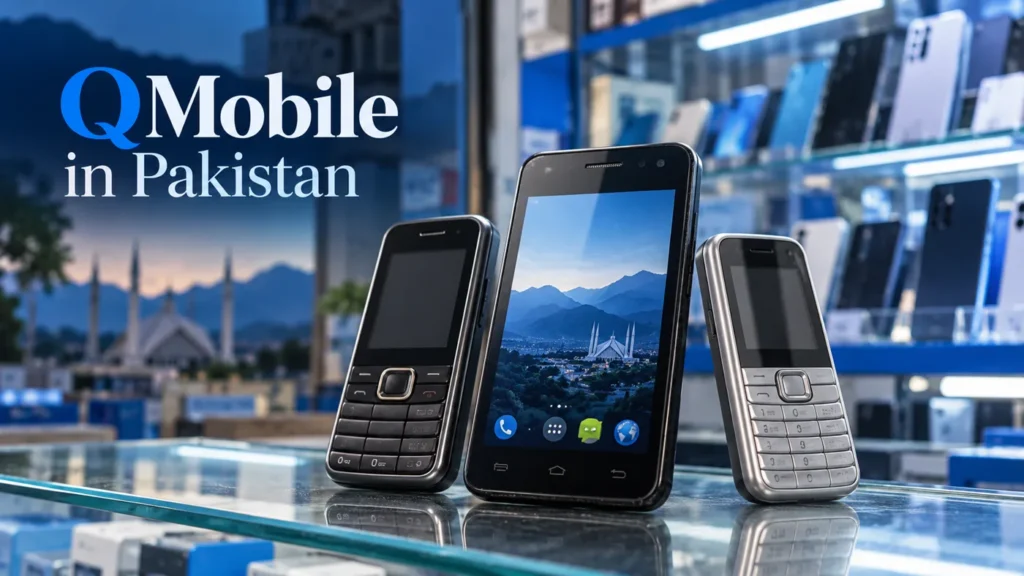
There was a time when QMobile was difficult to miss in Pakistan. Its advertisements appeared on television, its branding covered mobile shops, and its affordable phones attracted buyers who wanted more features without spending too much. For many Pakistanis, QMobile became a familiar option when buying a first mobile phone or moving from a basic handset to an Android smartphone.
Today, people often ask: Where has QMobile disappeared, and why did it lose its position in Pakistan? Some believe the company never introduced touchscreen phones. Others blame its decline entirely on tax controversy. However, the available evidence tells a more detailed story involving stronger competition, an import-based business model, regulatory trouble and attempts to return.
How QMobile Became Popular in Pakistan
QMobile’s official company history dates back to 2009. Its main attraction was affordability: it offered mobile phones aimed at customers who could not afford more expensive international brands.
This approach suited Pakistan’s price-sensitive market. A student buying a first phone, a family purchasing an additional handset, or a customer upgrading from a basic device could consider QMobile without stretching their budget as much.
An April 2013 report by The Express Tribune described how the company offered Android phones for around Rs6,500, including a warranty. That is a historical price, not a current offer, but it helps explain the brand’s appeal at the time. The same report highlighted its substantial customer base in rural Pakistan.
Advertising strengthened that appeal. Celebrity endorsements, shop branding and product placement made QMobile highly visible. Its success came from combining affordable products with a marketing presence that Pakistani customers recognised.
How Big Was QMobile Around 2015?
The impression that QMobile had a huge market around 2015 is supported by contemporary reporting.
According to a March 2016 report in The Express Tribune, QMobile accounted for approximately 57% of Pakistan’s recorded mobile phone imports in September 2015. This represented around 864,000 handsets that month. This was compared with just under 50% in September 2014.
The figures, however, need to be explained correctly. They refer to recorded handset imports, including different types of phone. They should not be presented as proof that QMobile held 57% of Pakistan’s smartphone sales or that 57% of Pakistanis used its devices.
The report also showed that QMobile’s strength varied by price bracket. It was particularly competitive below $100, while other brands held stronger positions in the more expensive smartphone categories. Its popularity was therefore closely related to its affordability.
Did QMobile Make Touchscreen and Android Phones?
Yes. The claim that QMobile only sold button phones is incorrect.
By April 2013, a report had already described QMobile’s touchscreen devices and Android smartphone range. The company participated in Pakistan’s transition towards smartphones rather than remaining exclusively a basic-phone brand.
Its Noir series included several touchscreen smartphones. Contemporary coverage records the launch of the Noir Z10 in November 2015 and the Noir LT700 in December 2015. These devices offered Android, touchscreen displays and 4G connectivity.
QMobile also partnered with Google to introduce an Android One device in Pakistan in 2015. This further demonstrated that the company was actively involved in the smartphone market.
The more useful question is why its smartphone business lost momentum despite these products.
Were QMobile Phones Imported from China and Rebranded?
Historical reporting supports this part of the story.
In April 2013, The Express Tribune reported that QMobile imported devices from Chinese vendors and sold them under its own brand instead of manufacturing them itself.
This arrangement helped the business offer products under a locally recognised name. It could focus on Pakistani distribution, advertising, pricing and customer support while sourcing phones from overseas suppliers.
Importing and rebranding products does not, by itself, establish wrongdoing or explain why a brand declines. The commercial challenge is maintaining a convincing reason for customers to choose that brand.
As competition increased, buyers could compare similar-looking phones from several companies. A local company needs more than just familiarity: its products, warranty, service and pricing must justify the purchase.
Competition Increased Before the Customs Controversy
An important early account of QMobile's difficulties appeared on 17 July 2017. On that day, Profit published an investigation asking whether the company’s strong position was weakening.
The report found that QMobile remained strong in entry-level smartphones priced at $100 or less, but lost ground to OPPO and Infinix in the $100–$250 mid-range segment, based on data available for February 2017.
This matters because it places competitive pressure before the widely reported Customs action later that year. The decline cannot be explained by a single late event.
The same investigation described competitors offering attractive prices and investing heavily in retail distribution. It also identified pressure from smaller brands at the cheaper end of the market. QMobile faced challenges across different customer budgets.
The business implication is straightforward: once more companies offered affordable phones, QMobile’s original advantage became more difficult to defend.
What Happened With Tax and Customs Issues?
Tax and import controversies were a significant part of QMobile’s difficulties, but they need careful wording.
On 4 November 2017, Profit reported that Customs had seized a shipment of approximately 64,000 mobile phones and tablets imported by Digicom Trading Pvt Ltd. According to the report, the shipment had been declared LED lights, and authorities were investigating the alleged avoidance of applicable duties and taxes.
A follow-up report published on 14 June 2018 discussed the confiscated devices and possible steps towards releasing them and ending the cases. It also reported the company’s explanation that the incorrect declaration resulted from a shipper’s mistake.
These reports establish that serious customs disputes and allegations existed. They do not justify saying that QMobile never paid taxes, or that every allegation resulted in a court conviction.
Such disputes can create commercial pressure through stock disruption, uncertainty and reputational damage. However, the available reporting does not provide a reliable calculation of how much of QMobile’s decline came from these issues compared with its competition.
Did QMobile Close in 2015?
No. The timeline does not support that claim.
QMobile was still a major subject of market reporting in 2017. It also made a renewed promotional push in 2020, when Turkish actress Esra Bilgiç became its brand ambassador for the View Max Pro series.
After its earlier peak, the brand continued to make comeback attempts. However, a marketing campaign and a lasting recovery are different things.
In March 2024, PhoneWorld reported another planned relaunch and described the earlier View Max return as unsuccessful at restoring the company’s position. Its account of the revised plans relied on unnamed sources, so those plans should be treated as reported intentions rather than proof of completed recovery.
Where Is QMobile Now?
As of October 2026, QMobile’s official website remains accessible and lists feature phones including the Q17, Q17 Pro, Q100, Q101 and Q2165 Music. The storefront currently features basic handsets.
It would therefore be inaccurate to say that QMobile has completely disappeared. Equally, an active website does not prove it has regained its former market position.
Its current listings suggest that it focuses on customers seeking simple, inexpensive phones. That is a narrower proposition than competing in the modern smartphone market, where buyers compare cameras, performance, storage, software and charging capabilities.
For a view of today’s smartphone choices, browse our Samsung and Xiaomi listings. Individual pages such as the Samsung Galaxy A16 4G and Realme Note 80 show how memory, displays and software differ across the current catalogue. These are present-day comparisons, rather than evidence about QMobile’s historical market share.
Can QMobile Become Popular Again?
A strong return would require a clear reason for Pakistani customers to choose QMobile today. Competitive pricing could help, but dependable products, accessible repairs, credible warranty support and consistent availability also matter.
For smartphones, the company would need to demonstrate that its devices meet present-day expectations. For button phones, it would need to compete convincingly on practical needs such as calling, ease of use and battery performance.
QMobile’s history shows how quickly an affordable brand can gain recognition in Pakistan. Its later difficulties also show how difficult it is to retain that recognition commercially. The evidence points to a combination of competitive pressure and reported regulatory problems, followed by comeback efforts that did not clearly restore its earlier dominance. The brand still exists, but its place in Pakistan’s mobile market has changed.
Reporting and source notes
This historical overview draws on The Express Tribune’s April 2013 and March 2016 reporting; Google’s 6 July 2015 Android One announcement; Profit’s 17 July 2017, 4 November 2017 and 14 June 2018 reports; PhoneWorld’s July 2020 and March 2024 coverage; and QMobile’s company information and current storefront, checked on 19 October 2026. Import figures are historical import data, not current smartphone sales. Customs allegations and the company’s explanation are attributed to contemporary reporting.
Spot an error? Send a correction. Read our editorial approach.
More mobile news